Wednesday, January 27, 2016

Naga Siren Guide Dota 2


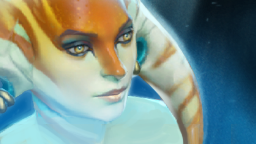
 Naga Siren (Slithice)


Among the high-sworn of the Slithereen Guard there is a solemn vow oft repeated before battle: No Slithereen may fail. In truth, these words are equal parts oath and enforceable covenant, for those who fall short of their duty are banished from the order. To fail is to be other than Slithereen.

Once most highly esteemed of her race, Slithice for many years commanded a battalion of her fellows, using her formidable voice as her greatest weapon. Powerful, sinuous, serpentine, she lead her deadly Guard in defense of the Deep Ones, and the great wealth of the sunken cities. But in the final battle of Crey her forces were driven back by a marauding army of levianths intent on finding tribute for their god Maelrawn. After the long and bloody onslaught, as the bodies were cleared from the sunken halls, a single jeweled chalice was found missing from the trove. Of her hundred Guard, only a handful survived, but their bravery and sacrifice was of little consequence. What mattered was that the treasure was taken. Honor destroyed. And so Naga Siren was cast out. Banished to search for the stolen chalice. Though she might add a hundred times her weight to the golden trovem she is doomed to live apart until that day she returns that which was taken. For no amount of gold is equal in honor to the honor she lost.

I write guides here and can be found streaming at http://www.hashd.tv/sp12; if you have any questions/comments feel free to post at either. I'm often on the first 10 pages of matchmaking, so you might see me there.

This is a set of builds for  Naga Siren. I love illusion based heroes, and Siren is one of the more versatile ones. Each build gets it's own minisection for you to check out, so consider this an anti-alt-tab guide. They are sourced from the various Dota scenes and my personal experience. The formatting for this guide is matched heavily with my  Faceless Void guide, which you can check out if you play him.

Naga Siren is one of the most versatile heroes in the game. No matter how you slice her (stats, skills, armor/movespeed, ultimate, utility) she is a fantastic hero capable of fulfilling any role from 1-5.

As a hero Siren has two areas that need focusing -- serious mana issues and stacking stats/HP for her illusions. Teams build her a lot of different ways, which I'll try to cover in rough order of popularity. She used to be ran as a teamfight carry with Linkens, then as a hard carry, and is now run almost always as a support. This isn't to say that she's not an excellent carry -- she is.

Siren is relatively tanky (2.3 strength gain on an agility carry, 5 starting armor, easy get-out-of-jail-free ulti, illusions to dodge/confuse stuns), a strong pusher/teamfighter with an awesome setup/getaway ulti, and a great laner. She has a very strong single target initiation in the form of  Ensnare, which helps secure early kills and makes her an effective  Blink/invis/BKB hero counter. She's a hero that not only likes level 16 but has the stats and scaling to take it to 25.

Note that for time calculations this guide assumes around ~350 gold per minute. Early less is expected and later more, but this will help you identify the time constraints you're under for certain builds without having to run them multiple times. Siren can farm multiple camps at once/plus lanes with ease via  Mirror Image with some basic attack move and  Rip Tide micro, so expect literally insane gold per minute after 25 minutes.

Another important note is that skill and item build are not a one-size deal. If you go mid a bottle would make sense. If you're getting free farm in lane and your team is pushing heavily maybe early image levels should take priority; maybe you need stats early against a trilane or a single mirror image early against a  Sven to dodge storm hammer. There isn't a way for me to offer alternative skill builds, but know that you can be successful with many different ones as all of siren's skills are fantastic.

I'm not going to list out skills/whatnot, there's a lot of excellent videos and replays of how to play Siren. An easy way to get better is to watch replays on player perspective -- filter recent games for Naga Siren and very high skill level. I will cover some of the points I don't see people execute consistently, even at higher levels.
Beware the cleave and AoE. Leshrac and Tiny are pretty decent counters for having stuns as well as AoE
Ensnare is one of the few skills that goes through BKB. It also interrupts channeling spells, making it super great against heroes like  Enigma or Lycanthrope that rely on magic immunity to make the most of their ultimate. Another important note is that it prevents heroes from going invisible, but is disjointable by going invisible before it latches
Your combo is image->ensnare->rip tide, not ensnare->image->rip tide. Ensnare has a long duration but the transformation time on images is significant
Speaking of transformation time you can dodge stuns/hits pretty easily with it
Your ult leaves them invulnerable for ~.1 seconds after they have control of their hero, meaning anyone with a BKB or blink is going to dodge any sort of non BKB-penetrating combo/initiation done with your song. It's not that good for initiating as they get a heads up as well
If anyone on the enemy team pops BKB in a teamfight pop  Song of the Siren and ensare them. They are now playing 5v1 as their team sits there slept
Net works on courier. If someone is getting an item form a courier in lane you can net it, then sleep them while you kill the courier
Carry a TP scroll. If things look bad you can always sing then TP out (assuming they don't have BKB). This is especially true at level 16 when your ultimate has a 60 second cooldown. At level 6 180 seconds is a big deal, but still better than dying. At level 11 you can basically push out of position and sing when they come to repel you, sort of like how Lycan can split push then ulti away but better
Level one images are really bad except as distractions/scouts/single target spell deterrents/dodgers. They basically become twice as good per skill level
If you're still looking for items after all the items listed  Butterfly,  Eye of Skadi or  Daedalus are the next items, but when games go long enough for you to consider ultra-luxuries at some point you need to stop getting items and start saving for buyback. For most of the game other items will give more survivability/utility/DPS, but evasion, Skadi, and crit obviously start pulling ahead lategame. With Skadi you will slow with your attacks while your illusions retain the manaburn orb.


Gameplay Strategy
Support Build

Overview
The Malaysian scene was the first to run siren as a support, a trend that has spread and become part of the core metagame. It's pretty viable as she has great (BKB penetrating) disable, laning utility, stacking and pushing with illusions, great farming for a support, and the ability to transition into a carry.

Early
Get a support item, not all 3. As a support you should provide your carry with lane presence, harassing, coordinating for kills, and pulling as needed. You will not have many last hits, so consider ganking with your ranged root and AoE gush. First item is either  Arcane Boots or  Urn of Shadows, then the other.

Midgame
You can turn mana regen into farm, something few supports (CM, SD, Lina, Leshrac) can. Make sure you use illusions to scout and net in ganks/teamfights. Your song makes and breaks the midgame. You have pretty good pushing power with illusions, but make sure you're there for fights. Halberd or Necrobook are standout support items that make your illusions tanky while providing lots of utility. Necrobook is more pushy while halberd is more teamfight.

Later
As you get towards lategame you can get Vlads/Diff as you start to rightclick more. Diffusal provides some extra utility with the purge and manaburn but you can grab pure support items here instead, though admittedly Vlads+Diffusal is pretty good.

Linken Rush

Overview
This build rushes Linken's, and was seen dozens of times at TI2. Linken's makes teamfights very difficult to take as you'll always get song off as you want to disrupt or initiate a teamfight, plus it makes your farm very rapid and safe.

Basically it gives you a pretty free license to be out of position split pushing as you just sing tp as soon as they show up and pop your Linkens. If you do notice 3+ heroes miss all you do is leave images to push while you move off map to jungle. Travels are gotten in games where you want to farm/split push incessantly.


Early
The RoH with PMS+6 armor makes you very hard to harass out of lane/lets you jungle freely, and song makes you hard to gank (even at level 6). The buildup to Linken's isn't that great but isn't bad and as soon as it's done you can just start spamming images down lane or in jungle. In classic Chinese style  Hand of Midas can be gotten before you finish Linken's (either after RoH or before if you really forced the offlane solo out).

Later
If you made it to Linken's on either regular boots  Boots of Travel are good for the farm, push, and chasing power they give as illusions don't get the attack speed from  Power Treads only +8 of a stat. Same thing as North American build -- Naga is commonly built towards 3 items lategame -- heart, diffusal, and manta. Linkens+Manta and your illusions make it very risky for the other team to try to use single target disables on you in teamfights.

Radiance Rush

Overview
The most viable carry Siren build right now, a fast radiance on Siren is even more disastrous for the other team as a Battlefury Antimage. Creep waves, neutral camps, and towers melt before your burning illusions


Early
Soul ring is your goto regen item in the current version, though you have to be careful using the active only as needed. You can get arcanes or drums to fill your manapool if you have to do things early, but ideally you'd just sit in lane with a ring of regen and farm a radiance.

Once you have radiance you cna start split pushing, though don't neglect your very strong early contribution from you skills. Song and net make for very strong teamfights, and radiance can stop creep waves from coming in during pushes.

Later
Radiance lets you farm multiple lanes/camps at once, using  Soul Ring to solve your mana issues short term. You won't be spamming rip tide to clear camps, rather just abusing radiance burn. You can just shove (attack-move) illusions down lane and it will require a hero there to stop the lane from pushing.

Farm items and become impossible to deal with.

Vlad's - Armlet Build

Overview
Originally a terrorblade build I faced in a clanmatch, I've recently seen this exact build on a quite a few agility carries --  Spectre,  Anti-Mage, even  Juggernaut. I think it was originally inspired by  Chaos Knight's build. This build focuses on a weird item for an agility carry --  Armlet of Mordiggian. It actually makes use of three of the most cost efficient items in the game (armlet, Vlad's, drums) to give you a strong midgame with a good lategame transition. Armlet/drums have solid synergy with Siren. Her built-in illusions benefit from armlet health and drum aura -- activate your armlet before you split! Vlads is good for teamfighting early as always, but this build does not solve your mana issues without arcanes on you and preferably at least one other hero.


Early
HoIW and basilius give you your early game regen, but your goal isn't to farm. Get your core (or even part of it) and start fighting. This build gives a lot of early stats which gives you a pretty strong 12-20 minute timing window to push with team and force teamfights. I get an extra early level of images so I can have them maxed at 10 and not 12.

Later

Manta or heart are the obvious transition out of this, as you'll hopefully be winning teamfights with your Vlad's+Drums aura and armlet illusions. Manta gives you more illusions to benefit from your items while also stacking movespeed and stats for them/you. Heart becomes an awesome endgame item as it lets you leave Armlet on all the time. Diffusal remains relevant as always.


CHOOSE THE BUILD WITH CONSIDERATIONS BELOW

Pick based on the role your team needs you to fill. If you need to be an ultra hard carry go radiance. If you need to go mid pick some modification of the 2nd build. Aggressive trilane carry? Armlet Vlads sounds good. Support? Support.

I can't give you a list of every scenario and every pick, so here's an easy pro/con table for the builds to help you choose.

S u p p o r t

Pros
Ability to farm with mana regen
Amazing skillset
Carry transition
Cons
Not going to get out of control like a carry
Melee
Poor starting int


Linken's

Pros
Early sustain
Annoying split push as soon as you have some levels in mirror image
Comes partially online fast
Moderate buildup
Very strong farming ability
Scales well lategame
Makes you a very resource intensive target to gank/stall ala  Morphling
Stats for illusions
Cons
Requires at least one other item to become a huge presence in fights
Not that fast at farming


Radiance

Pros
Radiance gives insane GPM
Cons
Fragile, all-in early game
Limited early HP


Armlet - Vlad

Pros
Early HP and stats
Good teamfight auras
Comes partially online fast
Easy buildup
Super cost-effective
Benefits illusions well
Great transition into diffusal/manta/heart
Cons
Armlet requires attention to turn off/on
Does not solve mana problems more than partially
Tight on item slots

CONCLUSION

This hero is a has a super fast ability to farm ( Fast as Storm Spirit and Shadow Fiend )after she finishes her Radiance. So there's the most common/effective playstyles for Naga. If you have any questions/comments/criticisms feel free to post them. At the very least I'd like a comment why if you feel like downvoting :P. If you feel it was worth the read a vote up helps get builds seen more, and I certainly would love to see some more non cookie-cutter Sirens.

Arteezy Naga Siren - Pro Gameplay Dota 2


Tuesday, January 26, 2016

Spectre Guide Dota 2

 Spectre - Mercurial

Just as higher states of energy seek a lower level, the Spectre known as Mercurial is a being of intense and violent energy who finds herself irresistibly drawn to scenes of strife as they unfold in the physical world. While her normal spectral state transcends sensory limitations, each time she takes on a physical manifestation, she is stricken by a loss of self--though not of purpose. In the clash of combat, her identity shatters and reconfigures, and she begins to regain awareness. She grasps that she is Mercurial the Spectre--and that all of her Haunts are but shadows of the one true Spectre. Focus comes in the struggle for survival; her true mind reasserts itself; until in the final moments of victory or defeat, she transcends matter and is restored once more to her eternal form.

Spectre is a hard carry who relies on applying constant pressure on the enemy team with her global presence.

She has the ability to excel in both teamfights and solo pickoffs, all this while having all the free time in the world to farm on her own, since her ultimate allows her to join any fight, anywhere, just by pressing a button.

She is well known for being one of the very best late game heroes in DotA, able to decimate entire teams with the combination of her ultimate, and one of the best scaling abilities in the entire game,  Dispersion. However, she can do much more than simply farm to secure your team's late game.

She is a very versatile carry who can be built in a lot of different ways, and can adapt to almost every situation. She has no rigid item build, and a lot of items are actually surprisingly good on her, giving a lot of room for experimentation, definitely the most fun part about the hero. This adaptability can make her a good pick in many lineups.

Having a very strong mid-game, significantly more so than most hard carries, since she has the ability to have high damage and chasing power even without items...her ability to gank and teamfight even early into the game should never be underestimated.

Pros:

+ One of the hardest carries in the game. A farmed Spectre can almost win teamfights 1 vs 5
+ Fairly tanky.  Dispersion makes survivability items scale really well on her
+ Global presence. Can jump instantly on any enemy hero!
+ Lots of free time to farm thanks to  Haunt
+ Good ganker
+ Great teamfighter
+ Can initiate teamfights. Good synergy with other AOE initiators.
+ Counters enemy initiation (disables  Blink Daggers)
+  Desolate is the strongest attack modifier for illusions in the game
+ Can be played both as a farmer and as a ganker. Great balance between fighting and farming, since she can farm and look for kills at the same time with her ultimate.
+ Doesn't need a lot of time to come online. Already very strong in the early-mid game with limited farm thanks to Desolate and Dagger
+ No, seriously, doesn't need to farm for 35 minutes to be useful. Can contribute a lot to early teamfights and defend against early push attempts. Perfectly viable as a mid-game fighting carry.


Cons:

- Terrible lane presence. Can't do much in lane besides farming...or at least trying to.
- Needs a lot of babysitting from supports to secure your early farm in lane - don't expect much of that in pubs.
- Extremely easy to shut down in lane (e.g aggressive trilanes)
- Gank magnet
- Level-dependent (needs fast level 10)
- Bad agility gain. Weak right-click without Desolate (luckily she doesn't rely on it)
- Has no hard disable. Gets easily kited by mobile heroes
-  Desolate bonus damage is unreliable, and easily countered (e.g illusion heroes).
- Slow farmer without an (expensive) farming item
- Long cooldown on ultimate (2 minutes).  Haunt cooldown can make you vulnerable to 5-man pushes (luckily pubs suck at pushing)
- Partially countered by  Black King Bar / magic immunity in general

Early Game


Purchase Below 8 mins


Early Regen Item (Choose One)

Boots Of Choice :


Purchase if you are able to pick off some kills in the early game and for solo kills.


Purchase for faster jungling and teamfighting.


Early Tank Item (Choose One)

Core (Mid Game, Get ASAP)

Late Game Options

World Best Spectre - Badman 8.2k MMR Spectre Spammer

Saturday, December 26, 2015

Sumail - Pakistani teenager becomes youngest gamer to surpass $1million in eSports earnings as Dota 2 tournament sets major records


The fast-growing popularity of eSports was further illustrated at the weekend with several milestones set at The International 2015 Dota 2 Championships in Seattle, USA, including the youngest gamer to earn more than $1million.
The grand showpiece of Valve’s popular massively online battle arena game Dota 2 (Defense of the Ancients 2), The International 2015 offered an eye-watering prize pot of $18,429,613 (£11,836,998)– the largest prize pool in eSports by some distance, beating the tournament’s own previous year’s record of $10,931,103 (£6,395,000). 
Overall winners Evil Geniuses (USA) bagged $6,634,661 (£4,253,042) of that total, having defeated China’s CDEC in a hard-fought final on 8 August 2015. 

One of that five-man-team’s stars was Pakistani gamer Sumail Hassan Syed aka “Suma1L”, (pictured far right with his Evil Geniuses teammates above), who at 16 years 2 months 21 days became the youngest gamer to earn $1 million in eSports winnings. His team’s victory at The International 2015 brought Sumail's total earnings from pro gaming to a staggering $1,639,867 (£1,052,141).
Sumail also became the youngest known winner of The International, although it’s important to note that the date of birth of three previous winners remain publicly unknown.
Sumail had moved to Illinois, USA in 2014 in order to pursue a career in pro gaming. In February 2015, he was part of the Evil Geniuses team that won the Dota 2 Asian Championship in China, pocketing his team $1.2 million (£770,614). He was still just 15 years old at the time.
But it wasn’t just Sumail breaking records at The International.
The cash prize awarded to Evil Geniuses was not only the largest winnings in eSports, it also made the USA-based team the highest-earning team in eSports. As of 11 August 2015, they had earned $11,185,866 (£7,175,441) from competing in 463 tournaments, which also includes competitions in such games as StarCraft, Halo and Counter-Strike.
Much of The International’s prize money was funded through the selling of a Dota 2 Compendium through Valve’s store, a significant example of a crowdfunded prize pool.

Sumail Ultimate Storm Spirit in DAC 2015 ( Dota 2 Asian Championship )


Sumail and Evil Geniuses VS CDEC in The International 2015 

The International 2015

The International 2015 was the fifth edition of The International, an electronic sports Dota 2 championship tournament, which took place at the KeyArena Center in Seattle, Washington. Hosted by Valve Corporation, the tournament began on May 25 with the qualifier phase and ended after the main event between August 3 and August 8.

The tournament awarded the biggest prize pool in eSports history, at over $18 million, with the winning team, Evil Geniuses, being awarded over $6 million.

Valve announced The International 2015 in January 2015, again taking place at the KeyArena Center in Seattle, Washington. Tickets went on sale in March, selling out in around 5 minutes.

An interactive compendium was again announced, being released in May 2015, with purchases of the compendium going towards the tournament's prize pool. By June, the prize pool had passed the previous year's total of $11 million, overtaking it as the largest eSports prize pool in history, and with 60 days of funding remaining. Valve anticipated that the total would exceed $15 million by the time of the tournament, a target which was reached in July. Purchasers who reach a high enough level with their compendium were sent a replica International trophy.

The tournament's games began on July 26, with the wild card matches, followed by four days of a round robin format group stage being played as best of two matches. The main brackets then began on August 3.

During the second day of the tournament, a DDOS attack was reported to have occurred, affecting around three hours of games.

Teams

Ten professional teams were directly invited to the event, with four regional winners and two 'wild card' winners also invited. The 'wild card' winners were decided during the main competition in Seattle from CDEC Gaming, Team Archon, MVP Phoenix and Vega Squadron.

Direct invitation


The International 2015 Match Details : 

Regional qualifier winners

Wild card winners Grand Final
Grand Final                              
Round of 2
   
B2CDEC Gaming1
B1Evil Geniuses3
Winner's Bracket

Round of 12Round of 6Round of 3
         
A1LGD Gaming2
B4Team Empire1
A1LGD Gaming0
B2CDEC Gaming2
B2CDEC Gaming2
C4Cloud 90
B2CDEC Gaming2
B1Evil Geniuses0
B1Evil Geniuses2
C3Complexity Gaming0
B1Evil Geniuses2
B3EHOME1
A2Team Secret0
B3EHOME2

Loser's Bracket

Monday, December 21, 2015

History of Esport


Esports (also known as eSports, e-sports, competitive (video) gaming, electronic sports, or pro-gaming) can be defined as a form of sports where the primary aspects of the sport are facilitated by electronic systems; the input of players and teams as well as the output of the eSports system are mediated by human-computer interfaces. Most commonly eSports take the form of organized multiplayer video game competitions, particularly between professional players. The most common video game genres associated with esports are real-time strategy, fighting, first-person shooter (FPS), and multiplayer online battle arena (MOBA). Tournaments such as The International, the League of Legends World Championship, the Battle.net World Championship Series, the Evolution Championship Series, and the Intel Extreme Masters, provide both live broadcasts of the competition, and prize money and salaries to competitors.

Although organized online and offline competitions have long been a part of video game culture, participation and spectatorship of such events have seen a large surge in popularity from the late 2000s and early 2010s. While competitions around 2000 were largely between amateurs, the proliferation of professional competitions and growing viewership now supports a significant number of professional players and teams, and many video game developers now build features into their games designed to facilitate such competition.

The genre of fighting games and arcade game fighters have also been popular in amateur[citation needed] tournaments, although the fighting game community has often distanced themselves from the eSports label. In 2012, the most popular titles featured in professional competition were the multiplayer online battle arena (MOBA) games Dota 2, League of Legends, and the real time strategy game StarCraft II. Shooting games like Counter Strike, Team Fortress 2, and Call of Duty have enjoyed some success as eSports, although their viewer numbers have remained below those of their competitors.

Geographically, eSports competitions have their roots in developed countries. South Korea has the best established eSports organizations, officially licensing pro gamers since the year 2000. Official recognition of eSports competitions outside South Korea has come somewhat slower. In 2013, Canadian League of Legends player Danny "Shiphtur" Le became the first pro gamer to receive a United States P-1A visa, a category designated for "Internationally Recognized Athletes". Along with South Korea, most competitions take place in Europe, North America and China. Despite its large video game market, eSports in Japan is relatively underdeveloped, which has been attributed largely to its broad anti-gambling laws.

In 2013, it was estimated that approximately 71,500,000 people worldwide watched competitive gaming. The increasing availability of online streaming media platforms, particularly Twitch.tv, has become central to the growth and promotion of eSports competitions. Demographically, Major League Gaming has reported viewership that is approximately 85% male and 15% female, with 60% of viewers between the ages of 18 and 34. Despite this, several female personalities within eSports are hopeful about the increasing presence of female gamers.

Early History (1972-1989)

The earliest known video game competition took place on October 19, 1972 at Stanford University for the game Spacewar. Stanford students were invited to an "Intergalactic spacewar olympics" whose grand prize was a year's subscription for Rolling Stone, with Bruce Baumgart winning the five-man-free-for-all tournament and Tovar and Robert E. Maas winning the Team Competition. The Space Invaders Championship held by Atari in 1980 was the earliest large scale video game competition, attracting more than 10,000 participants across the United States, establishing competitive gaming as a mainstream hobby.

In the summer of 1981, Walter Day founded a high score record keeping organization called Twin Galaxies. The organization went on to help promote video games and publicize its records through publications such as the Guinness Book of World Records, and in 1983 it created the U.S. National Video Game Team. The team was involved in competitions, such as running the Video Game Masters Tournament for Guinness World Records and sponsoring the North American Video Game Challenge tournament.


During the 1970s and 1980s, video game players and tournaments begun being featured in popular newspapers and magazines including Life and Time. One of the most well known classic arcade game players is Billy Mitchell, for his listing as holding the records for high scores in six games including Pac-Man and Donkey Kong in the 1985 issue of the Guinness Book of World Records. Televised eSports events aired during this period included the American show Starcade which ran between 1982 and 1984 airing a total of 133 episodes, on which contestants would attempt to beat each other's high scores on an arcade game. A video game tournament was included as part of TV show That's Incredible!, and tournaments were also featured as part of the plot of various films, including 1982's Tron.

Video Games Go Online

In the 1990s, many games benefited from increasing internet connectivity, especially PC games. For example, the 1988 game Netrek was an Internet game for up to 16 players, written almost entirely in cross-platform open source software. Netrek was the third Internet game, the first Internet team game, the first Internet game to use metaservers to locate open game servers, and the first to have persistent user information. In 1993 it was credited by Wired Magazine as "the first online sports game".

Large eSports tournaments in the 1990s include the 1990 Nintendo World Championships, which toured across the United States, and held its finals at Universal Studios Hollywood in California. Nintendo held a 2nd World Championships in 1994 for the Super Nintendo Entertainment System called the Nintendo PowerFest '94. There were 132 finalists that played in the finals in San Diego, California. Mike Iarossi took home 1st prize. Blockbuster Video also ran their own World Game Championships in the early 1990s, co-hosted by GamePro magazine. Citizens from the United States, Canada, the United Kingdom, Australia, and Chile were eligible to compete. Games from the 1994 championships included NBA Jam and Virtua Racing.

Television shows featuring eSports during this period included the British shows GamesMaster and Bad Influence! the Australian gameshow A*mazing, which would show two children competing in various Nintendo games in order to win points.


Tournaments established in the late 1990s include the Cyberathlete Professional League (CPL), QuakeCon, and the Professional Gamers League. PC games played at the CPL included the Counter-Strike series, Quake series, and Warcraft.

Rise of Global Tournaments (2000 onwards)

The growth of eSports in Korea is thought to have been influenced by the mass building of broadband internet networks following the 1997 Asian financial crisis. It is also thought that the high unemployment rate at the time caused large numbers of people to look for things to do while out of work. The Korean e-Sports Association, an arm of the Ministry of Culture, Sports and Tourism, was founded in 2000 to promote and regulate esports in the country.

In the second decade of the 21st century, eSports has grown tremendously, incurring a large increase in both viewership and prize money. Although large tournaments were founded before the 21st century, the number and scope of tournaments has increased significantly, going from about 10 tournaments in 2000 to about 260 in 2010. Many successful tournaments were founded during this period, including the World Cyber Games, the Intel Extreme Masters, and Major League Gaming. The proliferation of tournaments included experimentation with competitions outside traditional eSports genres. For example, the September 2006 FUN Technologies Worldwide Webgames Championship featured 71 contestants competing in casual games for a $1 million grand prize.

In April 2006 the G7 teams federation were formed by seven prominent Counter-Strike teams. The goal of the organization was to increase stability in the eSports world, particularly in standardizing player transfers and working with leagues and organizations. The founding members were 4 Kings, Fnatic, Made in Brasil, Mousesports, NiP, SK-Gaming, Team 3D. The organization only lasted until 2009 before dissolving.

The 2000s was also the peak of televised eSports. Television coverage was best established in South Korea, with StarCraft and Warcraft III competitions regularly televised by dedicated 24-hour cable TV game channels Ongamenet and MBCGame. Elsewhere, eSports television coverage was sporadic. The German GIGA Television covered eSports until its shutdown in 2009. The United Kingdom satellite television channel XLEAGUE.TV broadcast eSports competitions from 2007 to 2009. The online eSports only channel ESL TV briefly attempted a paid television model re-branded GIGA II from June 2006 to autumn 2007. The French channel Game One broadcast e-sport matches in a show called Arena Online for the Xfire Trophy. The United States channel ESPN hosted Madden NFL competitions in a show called Madden Nation from 2005 to 2008. DirecTV broadcast the Championship Gaming Series tournament for 2 seasons in 2007 and 2008. CBS aired prerecorded footage of the 2007 World Series of Video Games tournament that was held in Louisville, Kentucky, US. The G4 television channel originally covered video games exclusively, but broadened its scope to cover technology and men's lifestyle, though has now shutdown.

The popularity and emergence of online streaming services have helped the growth of eSports in this period, and are the most common method of watching tournaments. Twitch, an online streaming platform launched in 2011, routinely streams popular eSports competitions. In 2013, viewers of the platform watched 12 billion minutes of video on the service, with the two most popular Twitch broadcasters being League of Legends and Dota 2. During one day of The International, Twitch recorded 4.5 million unique views, with each view watching for an average of 2 hours.

The modern eSports boom has also seen a rise in video games companies embracing the eSports potential of their products. After many years of ignoring and at times suppressing the eSports scene, in 2014 Nintendo hosted an invitational Super Smash Bros. for Wii U competitive tournament at the 2014 Electronic Entertainment Expo (E3) press conference that was streamed online on Twitch. Halo developers 343 Industries announced in 2014 plans to revive Halo as an eSport with the creation of the Halo Championship Series and a prize pool of $50,000 USD. Both Blizzard Entertainment and Riot Games have their own collegiate outreach programs with their North American Collegiate Championship. Since 2013 universities and colleges in the United States such as Robert Morris University Illinois and the University of Pikeville have recognized electronic sports players as varsity level athletes and offer athletic scholarships.

In 2014, the largest independent eSports brand, Electronic Sports League, partnered with the local eSports brand Japan Competitive Gaming to try and grow eSports in the country.


Physical viewership of eSports competitions and the scope of events have increased in tandem with the growth of online viewership. In 2013 the Season 3 League of Legends World Championship was held in a sold-out Staples Center. The 2014 League of Legends World Championship in Seoul, South Korea had over 40,000 fans in attendance and featured the band Imagine Dragons, and opening and closing ceremonies in addition to the competition.

Classification as a Sport

Labelling video games as sports is somewhat controversial. While some point to the growth in popularity of eSports as justification for designating some games as sports, others contend that video games will never reach the status of "true sports". However popularity is not the only reason identified: some have argued that "careful planning, precise timing, and skillful execution" ought to be what classifies an activity as sport, and that physical exertion and outdoor playing areas are not required by all traditional or non-traditional 'sports'. In a 2014 technology conference, when asked about the recent buyout of popular game streaming service Twitch, ESPN president John Skipper described eSports as "not a sport - a competition." In 2013 on an episode of Real Sports with Bryant Gumbel the panelist openly laughed at the topic. In addition, many in the fighting games community maintain a distinction between their competitive gaming competitions and the more commercially connected eSports competitions of other genres. Video games are sometimes classified as a mind sport. In the 2015 eSports World Championship hosted by the International e-Sports Federation, an e-Sports panel was hosted with guests from international sports society to discuss the future recognition of e-Sports as a recognized, legitimate sporting activity worldwide.

EA Sports

EA Sports logo.png

EA Sports (stylized as EA SPORTS) is a brand of Electronic Arts that creates and develops sports video games. Formerly a marketing gimmick of Electronic Arts, in which they tried to imitate real-life sports networks by calling themselves the "EA Sports Network" (EASN) with pictures or endorsements with real commentators such as John Madden, it soon grew up to become a sub-label on its own, releasing game series such as NBA Live, FIFA, NHL, Madden NFL, and NASCAR. The best selling EA Sports series is FIFA series with over 100 million units sold.[3]

Most games under this brand are developed by EA Canada, the studio of Electronic Arts in Burnaby, British Columbia, as well as EA Blackbox, Vancouver, British Columbia and EA Tiburon in Maitland, Florida. The main rival to EA Sports is 2K Sports. Notably, both companies compete over the realm of NBA games.

EA Sports inherits its motto "It's in the game" from the parent company, Electronic Arts.

Unlike some other sport video companies, EA Sports has no special ties to a single platform, which means that all games are released for the best-selling active platforms, sometimes long after most of the other companies abandon them. For example, FIFA 98, Madden NFL 98, NBA Live 98, and NHL 98 were released for the Sega Genesis and the Super NES throughout 1997; Madden NFL 2005 and FIFA 2005 had PlayStation released in 2004 (FIFA 2005 was also the last PlayStation title to be released); and NCAA Football 08 had an Xbox released in 2007. Madden NFL 08 also had Xbox and GameCube releases in 2007, and was the final title released for the GameCube, with Madden NFL 09 following as the final Xbox title. Additionally, NASCAR Thunder 2003 and NASCAR Thunder 2004 were released not only for the PlayStation 2, but for the original PlayStation as well. EA Sports brand name is used to sponsor English Football League One team Swindon Town F.C. from the 2009–10 season onwards and the EA Sports Cup in the Republic of Ireland.

Exclusivity Deals

In 2002, EA purchased the license to NASCAR for six years, ending competition from Papyrus and Infogrames.

On December 13, 2004, EA Sports signed an exclusive deal with the National Football League (NFL) and its Players' Union for five years. On February 12, 2008, EA Sports announced the extension of its exclusive deal until the 2012 NFL season.

Less than a month after the NFL Exclusive deal, EA Sports signed a four-year exclusive deal with the Arena Football League (AFL).

On April 11, 2005, the National Collegiate Athletic Association (NCAA) and EA Sports signed a deal to grant EA Sports the sole rights to produce college football games for six years.

EA lost the rights for Major League Baseball (MLB) games to 2K Sports in 2005, ending EA's MVP series; however, EA made NCAA Baseball games in 2006 and 2007 after losing the MLB license. In January 2008, EA Sports decided not to renew their NCAA College Baseball license while they evaluate the status of their MVP game engine.

In 2005, EA Sports and ESPN signed a massive 15-year deal for ESPN to be integrated into EA Sports video games. EA's use of the ESPN license has steadily increased over the early life of the deal. EA's early usage of the ESPN license began with ESPN Radio and a sports ticker in titles like Madden NFL, NBA Live, Tiger Woods PGA Tour, and NCAA Baseball and Football. The ESPN integration now includes streaming podcasts, text articles (including content only available previously to ESPN Insider subscribers), and ESPN Motion video (including such programs as Pardon the Interruption).

PC Games

In June 2009, EA Sports announced that for 2010, the games Madden NFL, NCAA Football, NASCAR, NHL, NBA Live, and Tiger Woods PGA Tour would not be shipped for PC platforms (Microsoft Windows and/or Mac OS X). The NCAA Football series hadn't been released on the PC since 1998, The Tiger Woods series' last PC game was Tiger Woods PGA Tour 08, the NASCAR series hadn't had a PC version since NASCAR SimRacing in 2005, and the Madden series' last PC game was Madden NFL 08. The NHL series' last PC game was NHL 09. Likewise, NBA Live 08 was the final PC version for NBA Live.

The head of EA Sports at that time, Peter Moore, cited piracy and the fact that the "PC as a platform for authentic, fully-licensed, simulation sports games has declined radically in the past three years as the next generation consoles have attracted millions of consumers."

EA Sports released FIFA World as a free-to-play massively multi-player game which is exclusive to the PC on the 12th November 2013


The company noted that the FIFA and FIFA Manager series would still be released for the PC platform.

Playstation Home

On April 23, 2009, EA Sports released the long awaited "EA Sports Complex" space for the PlayStation 3's online community-based service, PlayStation Home in the European and North American versions. In the Complex, users can play a series of mini-games, including poker, kart racing, golf, and it also features a Virtual EA Shop. There are also a number of advertisements for upcoming EA Sports games. Each mini-game that the Complex features has a reward or rewards. Heavy Water, a company dedicated to developing for Home, developed the EA Sports Complex for EA Sports.
Originally, the Complex just featured two rooms: the EA Sports Complex and the EA Sports Complex Upstairs. The EA Sports Complex featured racing and had a golfing range that was unavailable to play. The Upstairs had four poker tables that users could play at anytime. With the June 18, 2009 update, the Complex's name changed to the EA Sports Racing Complex and the Upstairs changed to the EA Sports Complex Green Poker Room. Other than the name change, the update took away the golfing range and added four more karts for users to play Racing at and it also added one red poker table to the poker room.

The July 2, 2009 update added golf and another poker room making four rooms for the Complex; the EA Sports Racing Complex, the EA Sports Golf Complex, the EA Sports Complex Green Poker Room, and the EA Sports Complex Red Poker Room. The Racing Complex features Racing with a total of eight karts; four on each side of the Complex. The Golf Complex features two Practice Ranges for golfing; one range on each side of the Complex. A Golf Pro-shop is coming soon for the Golf Complex. The Green Poker Room featured four green poker tables that users can play anytime. The Red Poker Room featured four red poker tables but requires users to have 2,000 points to play.

On July 16, 2009, EA Sports released another room for the Complex making five rooms for the Complex. This room is the game space for Fight Night Round 4 called "Club Fight Night" featuring a mini-game called Club DJ and coming soon, robot boxing.

On July 30, 2009, EA Sports added a Black Poker Table to the EA Sports Complex Red Poker Room for the higher level players. In time, there will be a room dedicated for this table just like the Green Poker Room and the Red Poker Room. They also added a fifth green table to the Green Poker Room. The update also included the addition of the EA Sports Pro Shop where users can purchase full boxing outfits and furniture from Fight Night Round 4. The Pro Shop is found in the Racing Complex. The August 16, 2009 update replaced the fifth green table in the Green Poker Room with a red table. They also reduced the amount of points for the Black Table from 20,000 to 10,000. The August 27, 2009 update separated the scoreboards for each level of play - Green, Red, and Black - and into Daily boards and Season boards (left side and right side), improved card readability, additional rail seating near the poker tables, player removal on lock-up while playing poker, and player buy-in refund on removal (does not refund on Home disconnect) while playing poker.

On October 9, 2009, EA Sports released the EA Sports Complex to the Japanese version of Home. They also released NFL jerseys for every team in the league for purchase inside of the EA Sports Complex and in Home's shopping complex. EA Sports have also teamed up with the Home team to produce and distribute exclusive virtual items that serve to support National Breast Cancer Awareness Month. 100% of proceeds for these items went go to the Brees Dream Foundation in support of breast cancer research and awareness programs. The items are black jerseys with a pink number 9 on the front and the name Brees on the back also in pink. These jerseys was be available from October 15, 2009 to November 25, 2009. On November 5, 2009, for those who purchased the Brees Breast Cancer jersey, they received a free DJ kit that is featured in the Club Fight Night space by entering one of the two EA Sports Complex poker rooms between November 5, 2009 and November 25, 2009. On November 25, 2009, Fight Night Round 4 producers Mike Mahar and Brian Hayes were in Home between the hours of 4:00pm and 5:00pm PT (7:00pm and 8:00pm EST), for a live chat with the PlayStation Home community in one instance of the Club Fight Night space. On January 7, 2010, EA Sports released NCAA college football jerseys in the EA Sports Complex and in Home's shopping complex.

On August 2, 2011, EA Sports launched the EA Sports Season Ticket subscription service. It was discontinued in 2015 and it was replaced with the similar EA Access service.

Website

EA Sports Official Website : https://www.easports.com/